The Label Stops Here: Why UK Drinkers Are Swapping 'Craft' for Cold, Hard Batch Details
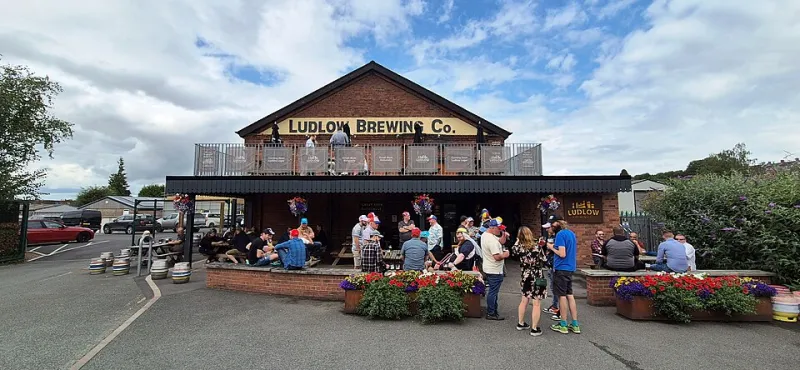
Photo: Anthony Parkes , CC BY-SA 2.0, via Wikimedia Commons
Walk into a supermarket beer aisle in November 2026 and you will see the word 'craft' doing a lot of heavy lifting. It is on multipacks, on own-brand lagers, on bottles with labels that look like they were designed by a focus group in a hurry. That is not a crime. But it does mean the word has stopped doing the job many drinkers once relied on: telling them something useful about who made the beer, how, and how fresh it is.
The quiet backlash is not a rejection of good beer. It is a rejection of shorthand. Across the UK, drinkers are asking for batch numbers, brew dates, named hop farms and tasting notes that read like they were written by a person rather than a spreadsheet. They are trading 'craft' for 'small-batch' — not because small is automatically better, but because small-batch claims tend to come with evidence attached.
When a word becomes wallpaper
There was a time, not so long ago, when 'craft' on a pump clip told you something. It suggested a brewery small enough to care about the last five barrels, a beer that had not been sat in a warehouse since spring, and a person you could ring if the hops ran short. That meaning has been stretched thin. Supermarkets now sell 'craft-inspired' lagers. Big brands launch 'crafted' ranges. The word has become wallpaper: pleasant, familiar and almost entirely decorative.
None of this is new. But 2026 feels like the year drinkers stopped shrugging at it. Ask anyone who works behind a bar in a city with a decent beer scene and they will tell you the same thing: the questions have changed. Less 'is this craft?' More 'when was this brewed?' and 'which farm are the hops from?'
At Backlash Brewery, we have felt that shift in our own small way. Our labels carry a batch number and a brew date because we got tired of the alternative. It is not a marketing masterstroke. It is just the information we would want if we were standing on the other side of the bar.
What publicans hear across the bar in 2026
Ruth Calder runs The Hop & Anchor, an independent free house in Norwich. She has seen the change in customer language over the past year or so.
'People used to ask if something was craft,' she says. 'Now they ask when it was brewed and which farm the hops came from. If we cannot answer, they move on. They are not being difficult. They have just learned that the badge does not tell them much.'
Ruth adds that cask turnover has become part of the conversation. 'A fresh cask is the best advert we have. Drinkers can taste the difference between a beer that was tapped on Tuesday and one that has been on since the previous weekend. They ask about that now.'
Dev Patel at The Crown & Cask in Sheffield has noticed something similar, especially among drinkers in their late twenties and thirties who came to beer through supermarket shelves and are now exploring taprooms.
'The question I hear most is: what is fresh?' he says. 'They want a cask that has been tapped this week, not a badge on a pump clip. They also ask about ABV and bitterness in plain language. If a beer says citrus and pine, they want to know what that actually means in the glass.'
Both publicans said the same thing in different ways: customers are not looking for a new word. They are looking for proof.
A practical checklist for real small-batch British beer
So what should you look for if you want to back genuine small-batch British brewing? It is not about rejecting every beer that sells in a supermarket, and it is not about pretending that scale is always the enemy. It is about asking better questions.
- A batch number or brew date. A best-before date tells you when a beer might go off. A batch number tells you when it was made. The second is far more useful.
- Named hops, not just 'hops'. A variety and a harvest year are a good sign. A named farm is even better.
- Tasting notes with edges. Honest notes mention bitterness, malt character and finish. They do not reduce everything to 'citrus bomb' or 'smooth'.
- A short, readable ingredient list. Malt, hops, yeast, water. If there is more going on, it should be explained clearly.
- A brewery address and a brewhouse size. Small-batch does not have a legal definition, but a brew length and a real location are hard to fake.
- Rotation and seasonality. Small brewers change their range. If a beer is always available in every format everywhere, it may still be good — but it is probably not small-batch in any meaningful sense.
- A taproom or brewery shop. Not essential, but it is a useful signal that the brewery has a direct relationship with drinkers.
None of these checks guarantees a great pint. They simply narrow the gap between the story on the label and the beer in your hand.
Why fresh, traceable beer tastes better
There is a reason this matters beyond labelling. Hops fade. Malt settles. A pale ale that was singing three weeks ago can taste like a different beer after a long spell in a warm storeroom. Small-batch British brewers tend to work in shorter runs, which means fresher beer more often — but only if the drinker knows what to ask for.
The same applies to identity. When a brewer can name the hop farm and the harvest year, they can build a flavour profile that is genuinely local rather than borrowed from a generic international playbook. That is how British beer starts to taste like Britain again: not through flag-waving, but through specifics.
The backlash is not anti-scale
It would be easy to turn this into a rant against big breweries. That would miss the point. Scale can deliver consistency, value and availability, and plenty of drinkers rely on those things. The problem is not size. The problem is using 'craft' as a costume.
The quiet backlash is really a demand for honesty. Drinkers in 2026 are less interested in what a beer calls itself and more interested in what a brewer can prove. Batch numbers, named farms and plain-English tasting notes are not glamorous. They are just useful. And after years of watching the word 'craft' mean everything and nothing, useful feels like a relief.