Small Plants, Big Character: Five British Hops Brewers Are Quietly Backing in 2026
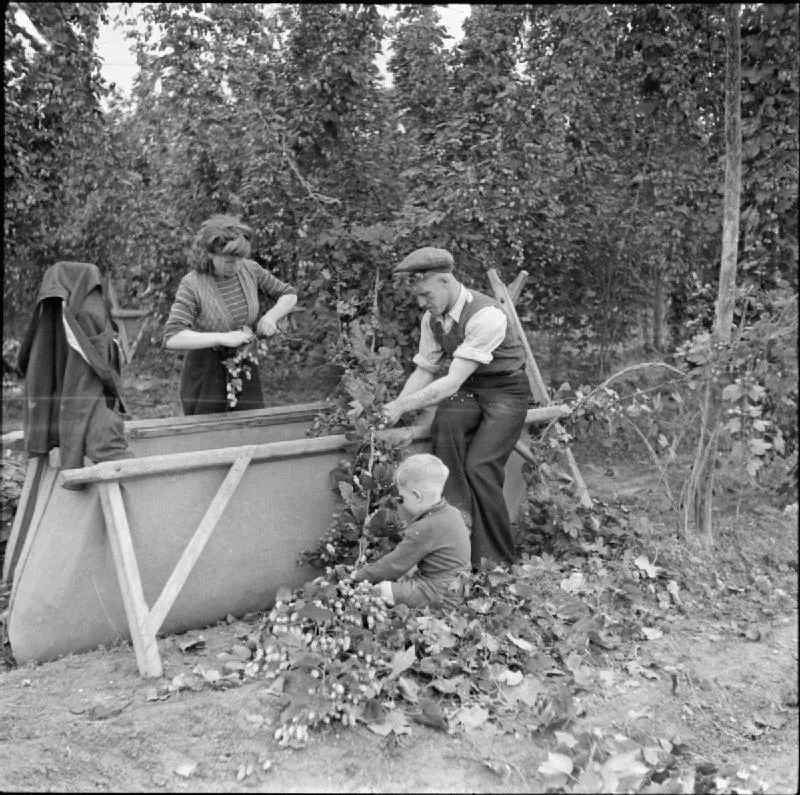
Photo: Ministry of Information Photo Division Photographer, Public domain, via Wikimedia Commons
The 2026 UK hop harvest was not the easiest. A wet spring, a warm late summer and the usual anxiety about picking windows kept growers on their toes. But walk into a small brewery in November 2026 and you will hear a familiar note of optimism. Brewers are talking about homegrown hops again — not as a patriotic gesture, but as a practical way to build a flavour identity that does not taste like everyone else's pale ale.
That matters more than it used to. Imported hops have become more expensive and less predictable, and the climate is making classic growing regions harder to farm. For small-batch British brewers, the answer is not to abandon the big-name varieties altogether. It is to look closer to home, work with smaller lots and learn how British hops behave in the brewhouse.
Why homegrown hops are having a moment
There is a supply story here, but there is also a taste story. British hops tend to be more restrained than the loudest American varieties. They can be herbal, spicy, leafy, floral, earthy and gently fruity. That makes them brilliant in cask bitter, best bitter, pale ale and saison — the kind of beers that reward a second pint rather than a single Instagram post.
Small brewers are also getting better at talking about them. Instead of listing a generic 'hops' line, more labels now name the variety and the harvest year. Some even name the farm. That transparency is exactly what drinkers have been asking for.
Five British hops to watch in 2026
This is not a definitive ranking. It is a snapshot of varieties that are quietly turning up in small-batch brews, often in trial batches and one-off casks. Some are established. One is still experimental. All of them are worth seeking out.
Boadicea: the spicy workhorse
Boadicea is not new, but it is under-appreciated. It brings a herbal, earthy character with a light spice and a soft floral edge. Think of it as a backbone hop rather than a headline act. It works well in bitters and low-ABV pale ales where you want bitterness without a wall of tropical fruit.
Norfolk's Marsh Lane Brewing has used Boadicea in a 3.8% cask bitter called Fenlight, and it is a good example of what the variety can do: dry, gently spicy and very easy to drink. At Backlash, we have been trialling it in a darker best bitter where its earthy notes sit comfortably alongside a biscuity malt base.
Jester: blackcurrant and grapefruit
Jester has been around long enough to feel familiar to hop nerds, but it is still not a household name. It brings blackcurrant leaf, grapefruit and a touch of pine, with a clean bitterness that works in pale ale and IPA. It can be loud if you use it late and heavy, but it is more interesting when it is allowed to share the stage.
Kent's Weald & Down Brewing has been using Jester in a 4.2% pale ale with a simple malt bill, and the result is bright and drinkable rather than syrupy. Look for beers that describe it as blackcurrant and grapefruit rather than 'tropical'. That is usually a sign the brewer is actually tasting the hop.
Harlequin: the citrus crowd-pleaser
Harlequin is one of the more approachable British hops for drinkers who usually reach for citrus-forward beers. It brings grapefruit, lime zest and a soft tropical note, with enough bitterness to keep a pale ale honest. It is not as aggressive as some of the big international varieties, which makes it useful in session beer.
Yorkshire's Pike Edge Brewery has used Harlequin in a 4.0% cask pale that has been doing the rounds in Sheffield and Leeds. It is the kind of beer that works on a cold Saturday afternoon: bright, refreshing and not trying too hard.
Olicana: soft fruit and gentle bitterness
Olicana is another variety that deserves more attention. It offers soft stone fruit, grapefruit and a gentle herbal finish. It is not a hop that shouts. It is a hop that rounds things off, which is exactly what many small-batch brewers want when they are building a beer around British malt.
Cwm Tap in south Wales has used Olicana in a 4.5% pale ale with a touch of wheat, and the result is soft, fruity and very drinkable. It is a good reminder that British hops do not have to be austere or old-fashioned. They can be generous without being loud.
The dwarf hop experiment: small plant, big potential
The most interesting story from the 2026 harvest is not a named variety at all. It is a new experimental dwarf hop that several growers and brewers have been working with. Dwarf hops grow on shorter plants, which makes them easier to manage and potentially more resilient in a changing climate. The trade-off is usually yield and consistency, which is why they are still in the trial stage.
The sample we tasted at Backlash had lime zest, green tea and a subtle white-grape character, with a gentle bitterness that would work beautifully in a low-ABV pale or a saison. Our own trial batch, Small Hours, is still a work in progress, but it already tastes like the beginning of something useful: a British hop that feels fresh rather than nostalgic.
What this means in the glass
You will not see a sudden takeover of British hops on every bar. Small-batch brewing works in small volumes, and experimental varieties take time to prove themselves. But you will see more single-variety beers, more harvest-year labelling and more brewers talking about farms rather than just flavour descriptors.
For drinkers, the practical move is simple: ask what is in the beer. If a pump clip or bottle names the hop variety, try it alongside a beer you already know. You will start to notice the difference between Jester's blackcurrant lift and Boadicea's earthy backbone. That is how a local hop scene builds — one pint at a time.
The catch: consistency and supply
There is no point pretending everything is rosy. British hops come in smaller volumes, and vintage variation is real. A hop that tastes brilliant in one harvest may be quieter the next year. Small brewers have to blend, adjust and sometimes accept that a beer will change from batch to batch.
That is not a flaw. It is part of what small-batch brewing is. The alternative — a beer that tastes exactly the same every time because it is built from anonymous extracts and global contracts — is not necessarily better. It is just different.
In 2026, the most interesting British beers are the ones that taste like somewhere. Homegrown hops are helping brewers do that, quietly and without too much fuss. Keep an eye on the pump clips. The small plants are coming.